Downtime is rarely just “bad luck”. There are usually warning signs beforehand.
In German SMEs, maintenance is often planned as follows: fixed intervals, fixed checklists, fixed spare parts. This looks organised. However, it is often expensive. Because real problems do not follow a calendar. They follow stress, wear and process deviations.
The question is not: “Have we carried out maintenance?”
The question is: “Did we do the right thing at the right time?”
Bosch Rexroth: Condition-based maintenance in its own factory
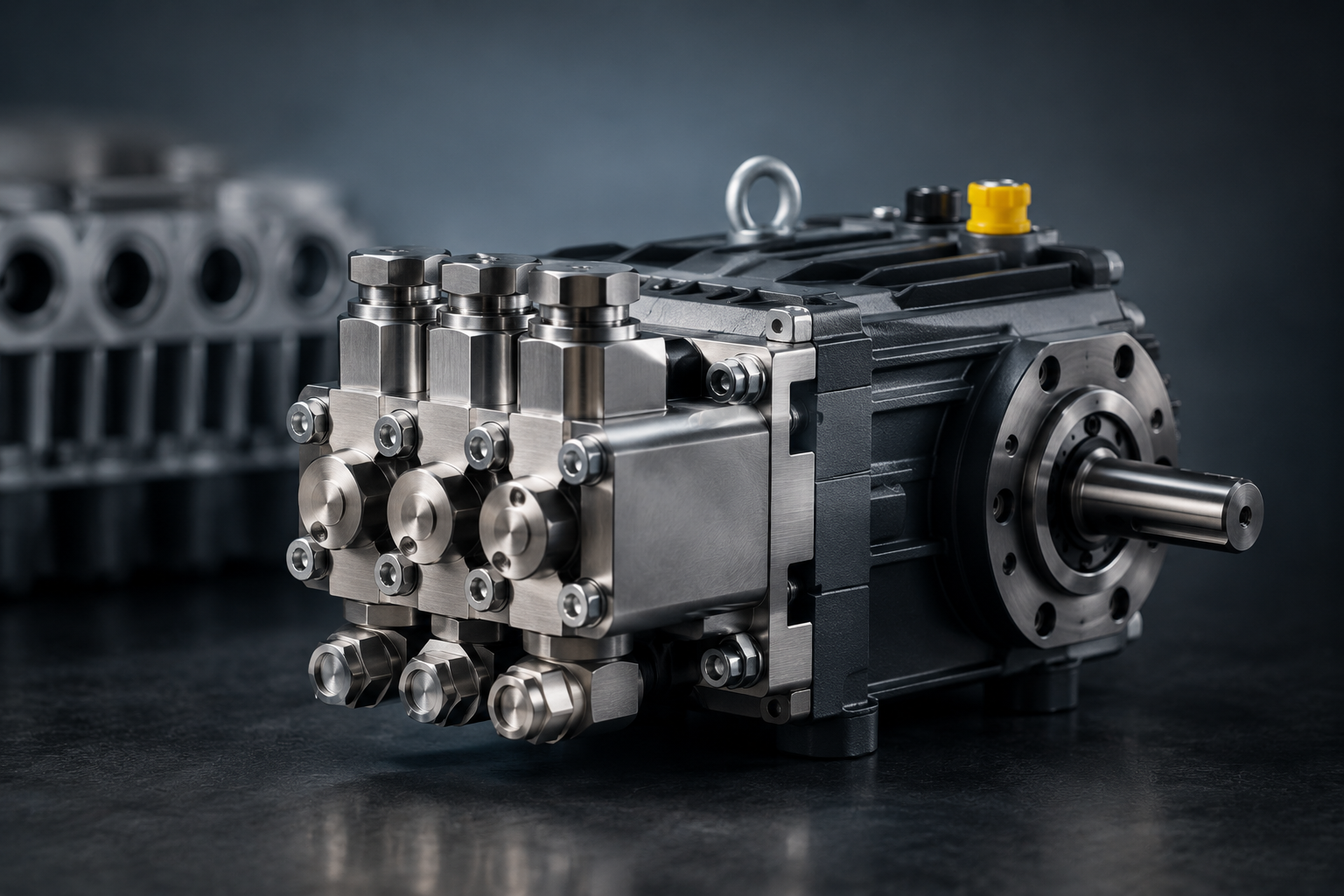
In a case study from its Homburg plant, Bosch Rexroth describes how condition-based maintenance was implemented on hydraulic test benches. The aim: fewer faults caused by contamination, fewer unnecessary maintenance measures, and more consistent quality. In one specific case, an efficiency increase of 5 % is cited.
This is not marketing “wishy-washy”, but precisely the lever that SMEs feel:
-
fewer unplanned stoppages,
-
fewer parts replaced ‘on a hunch’,
-
greater process stability.
What constitutes “knowledge” here – and why AI makes sense in this context
Condition-based maintenance only works if you detect deviations early:
-
Pressure profiles change,
-
Temperature drifts,
-
Vibrations increase,
-
Cycle times become “erratic”.
AI excels at filtering such patterns from data. It detects deviations faster than the human eye. It recognises combinations that people overlook in everyday life. However: AI does not automatically tell you what you should do. That remains a human decision.
The SME toolkit: Getting started can be this simple
You don’t need a ‘major Industry 4.0 overhaul’. Start like this:
-
Choose a bottleneck system. The one that determines the line.
-
Measure 2–4 signals that you already have or can easily add.
-
Define 3 typical failure scenarios (e.g. leakage, contamination, bearings).
-
Determine: “What does 1 hour of downtime really cost us?”
-
Decide after 8–12 weeks: scale up or stop.
This is precisely where “AI-supported, but human-led” comes into play:
AI classifies signals. People assess causes. People set priorities.
What SMEs can take away from this
-
Scheduled maintenance is often more expensive than necessary.
-
A small pilot project can be enough to prove the benefits.
-
AI helps with pattern recognition. People take the action.
-
The goal is not ‘more data’. The goal is less downtime.