If the problem isn’t the product itself, but the assumption behind it

Case studies

Many business decisions do not fail because of technical issues, lack of commitment or a lack of willingness to sell. They fail because of assumptions that have never been properly tested.

Aiquiro Research helps you to identify precisely these assumptions, test them against reliable sources and use the results to make better decisions.

Typical real-life examples

Whether it’s market entry, sales, investment or automation: in many companies, the real problem lies not where one might first suspect. Often, it is not that the product is weak, but that the picture of the market is too vague. It is not that sales are too slow, but that the sales pitch misses the mark. It is not that the idea is wrong, but its foundation.

This is precisely where Aiquiro Research comes in.

We test hypotheses, challenge common assumptions and create a documented basis for decision-making before assumptions turn into costly missteps.

Four typical decision-making scenarios

Case Study 1

It wasn’t the product that was the problem, but the assumption

Technically sound, internally consistent, but without the expected market response.

The situation

A company has a technically sound product. Development, quality and operational readiness are all in order. Yet the expected success fails to materialise.

The assumption

The product is not yet strong enough, or simply needs to be marketed better.

The real problem

Often, the root cause lies further back: demand was misjudged, customer benefits were weighted differently, or the actual usage scenario was never properly assessed.

What Aiquiro Research examines

We investigate the assumptions underlying the product, its positioning and market expectations. We examine real signals from the market, the competition, the customer environment and practical application.

Your benefits

You can identify at an earlier stage whether an issue lies with the product itself or with the underlying conditions.

Case Study 2

Market entry planned – but based on the wrong signals

A market may seem attractive, but it could still be the wrong next step.

There is often a wide gap between market potential and a genuine opportunity to enter the market.

The starting point

A company wishes to expand into a new market. Initial assessments appear positive, and internal expectations are high.

The assumption

The target market is fundamentally suitable because its size, sector or individual contacts appear promising.

The real problem

There is often a significant gap between general market potential and the actual likelihood of entry. Regulatory frameworks, price levels, distribution structures, cultural barriers or existing competitive ties are easily underestimated.

What Aiquiro Research examines

We analyse market structure, relevant competitors, barriers to entry, pricing logic, the partner landscape and reliable demand signals.

Your benefits

You gain a sound basis for a go/no-go decision rather than expanding on a hunch.

Case Study 3

The sales team makes a sound argument – but unfortunately it misses the mark

The offer is good, discussions are underway, but the response remains weak.

Not every strong argument is necessarily a deciding factor in a purchase.

The current situation

The sales team is active, the product is easy to explain, and discussions are underway. Nevertheless, sales figures are falling short of expectations.

The assumption

The market is difficult at the moment, or the sales team simply needs to build up more contacts.

The real problem

Arguments are often based on benefits that appear compelling from the company’s perspective, but are not decisive for the customer’s purchase decision. The language is right, but the focus is wrong.

What Aiquiro Research examines

We investigate which problems customers actually want to solve, which criteria really matter when making decisions, and how competitors position their offerings.

Your benefits

You refine your arguments in the areas where customers actually compare, evaluate and decide.
Case Study 4

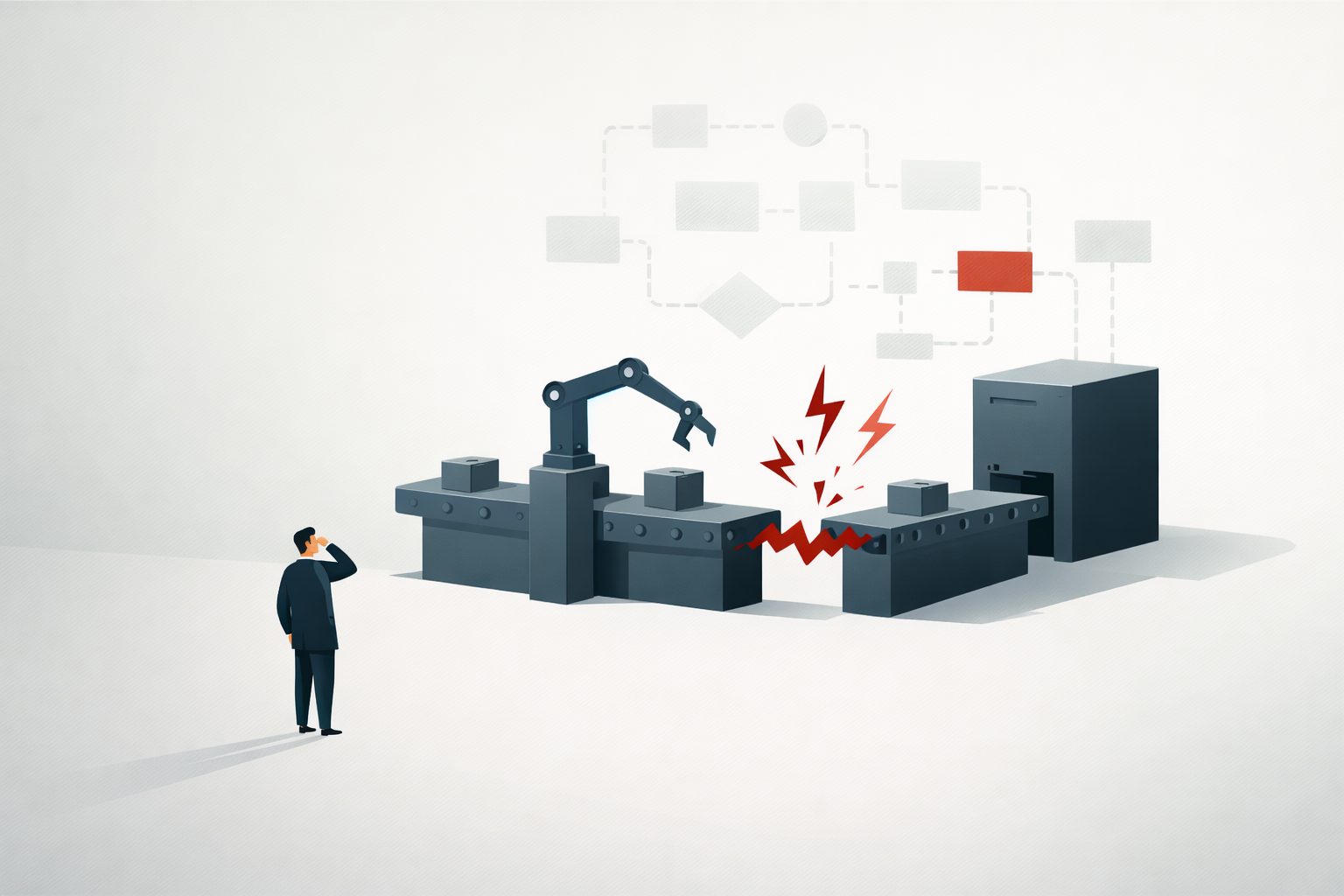
Automation is planned, even though the bottleneck lies elsewhere

Technology is only helpful where the actual problem has been properly identified.

Not every friction point in everyday life is automatically a candidate for automation.

The starting point

A company is planning to invest in automation, digitalisation or AI. The project seems plausible and forward-looking.

The assumption

More technology will automatically eliminate the critical bottleneck.

The actual problem

In many cases, the bottleneck lies not in the technology, but in process variance, poor data quality, organisational friction or unrealistic expectations regarding its implementation.

What Aiquiro Research examines

We analyse not only the technical concept, but also its actual feasibility in day-to-day operations: processes, interfaces, prerequisites, risks and economic viability.

Your benefits

You invest more strategically and avoid projects that sound good but do not work properly in practice.

What all these cases have in common

They follow a typical pattern:

The apparent issue is rarely the root cause. Anyone who focuses solely on the product, price or sales is likely to overlook the underlying assumptions. And the size of the company is irrelevant. The underlying principles apply to small, medium-sized and large enterprises, as well as to corporate groups!

Aiquiro Research helps you to uncover these hidden premises and examine them systematically. This creates clarity before resources are committed, markets are entered or strategies are defined.

How Aiquiro Research operates

We don’t rely on gut feelings or general buzzwords.

We work with questions, hypotheses, sources and cross-checking.

Typically, we examine:

  • What assumption lies behind a decision?

  • What external signals actually support it?

  • What counterarguments or warning signs are there?

  • What are the implications for the market, sales, investment or positioning?

This results not in a vague assessment, but in a transparent basis for decision-making.